
 English
 Español
 Português
 Français
New era 1.6T OSFP224 2xDR4 Transceivers
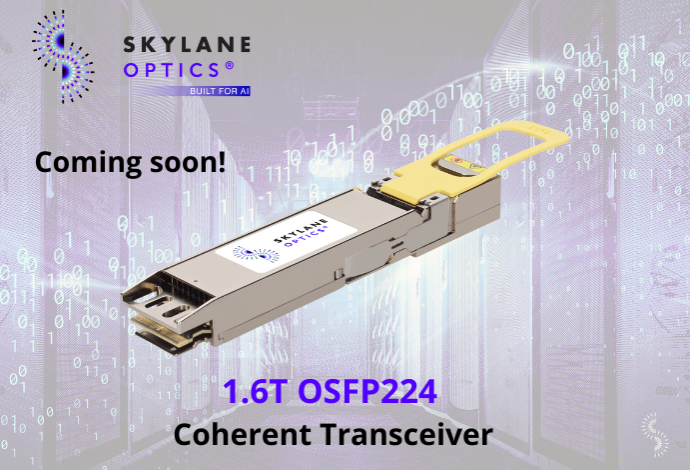
The Future of Data Transmission Is Here
As data centers face rising bandwidth demands, 1.6T technology emerges as the next evolution in high-speed connectivity. This milestone marks the transition to 224G signaling per lane, doubling the capacity of today's 800G transceivers built on 112G lanes — a game-changing upgrade for data center performance. For planners, operators, and network architects, this signals a critical moment to future-proof infrastructure for the AI-driven, data-intensive workloads of tomorrow.
Skylane Optics is ready.
Our 1.6T OSFP224 2xDR4 transceivers and 1.6T OSFP224 Direct Attach Cables (DACs) are engineered to deliver ultra-fast, next-level data transmission in the most demanding networking environments. Designed for low insertion loss, high signal integrity, and full compliance with OSFP MSA and IEEE 802.3dj standards, these solutions guarantee seamless multi-vendor interoperability and robust performance.
Built for scale, speed, and the future — Skylane Optics' 1.6T solutions are ready to power the next wave of AI and high-performance data center connectivity.
1.6T OSFP224 2xDR4
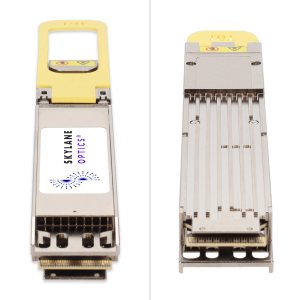
OSFP224-1600GB-2XDR4-SKY MSA and TAA 1.6T 2xDR4 PAM4 OSFP224 Transceiver (SMF, 1310nm, 500m, 2xMPO, DOM, CMIS 5.0)
1.6T OSFP224 DAC
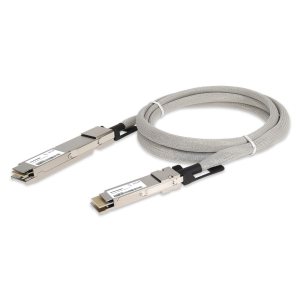
OSFP224-1600GB-PDAC0-5M-SKY MSA and TAA 1.6T OSFP224 to OSFP224 Direct Attach Cable (Passive Twinax, 0.5m, CMIS All)
OSFP224-1600GB-PDAC1M-SKY MSA and TAA 1.6T OSFP224 to OSFP224 Direct Attach Cable (Passive Twinax, 1m, CMIS All)
Key Features:
- Supports up to 1.6T transmission, enabling high-speed data transfer for next-generation networking applications.
- Compliant with OSFP MSA and IEEE 802.3dj standards, ensuring seamless interoperability across multi-vendor environments.
- Low insertion loss and built-in EEPROM functions, optimizing signal integrity and system performance.
- Operating temperature of 0°C to 70°C, ensuring reliable performance while meeting RoHS2.0 compliance for environmental sustainability.
 Celebrating 4 Years as Part of the Amphenol Family
 Como usar EDFAMUX para expandir a rede óptica sem aumentar custos
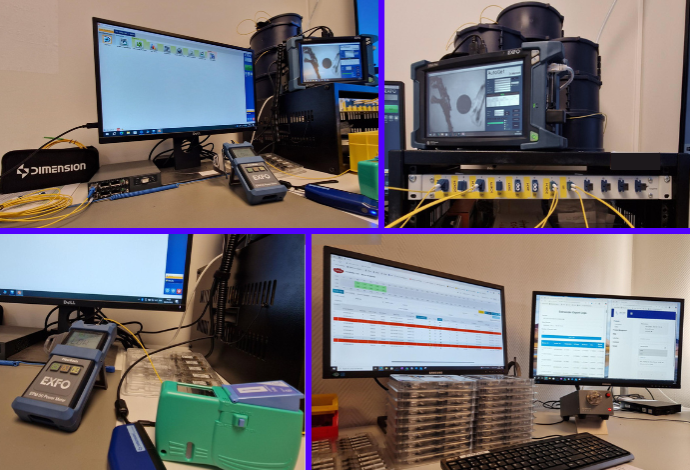 How We Test Our Compatible Optical Components
 What is an Optical Transceiver?