
 English
 Español
 Português
 Français
How We Test Our Compatible Optical Components
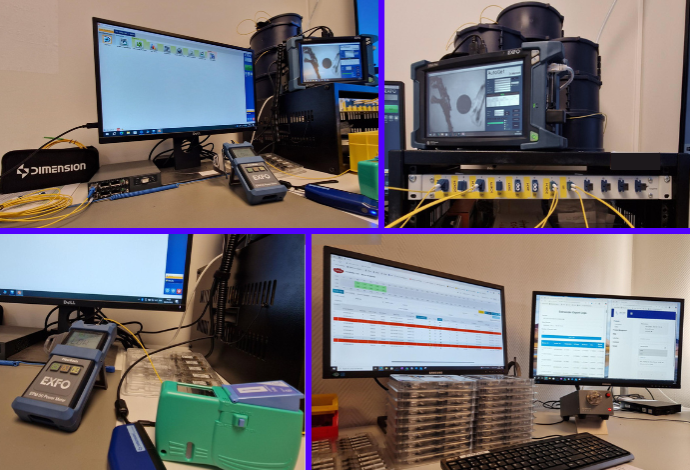
At Skylane Optics, rigorous quality assurance is at the heart of everything we do. Thanks to our comprehensive testing and validation procedures, we proudly maintain a 99.98% reliability rate across our compatible optical components. Here's how we achieve this level of excellence.
Step 1: Qualification
Every component is first subjected to an in-depth internal qualification process. Our expert engineering team reviews all associated documentation — including datasheets, reliability reports, and full Bills of Materials — to ensure compliance with our quality standards.
We apply a ten-criteria checklist, taking into account elements such as thermal cycling and vibration resistance. All relevant data is logged and tracked through our proprietary Data Traveler System (DTS), ensuring full traceability from component intake to final delivery.
Step 2: Validation
Our validation procedures ensure each solution meets demanding technical and operational requirements. All products undergo a 2,000-hour reliability stress test, and transceivers over 400G are submitted to advanced testing protocols using high-precision lab equipment.
Hardware validation is conducted using industry-leading tools, such as EXFO platforms, to verify compliance with transmission standards and consistency of maximum data rates. Optical validation is performed using Multilane ONTs to analyze critical parameters such as eye diagrams and extinction ratio.
Step 3: Compatibility Testing
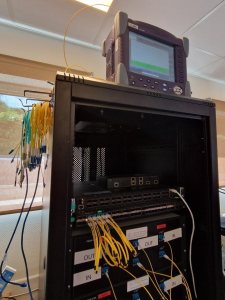
Once validated, components are tested for compatibility within real-world environments.
We simulate customer-specific Network Equipment Manufacturer (NEM) setups in our lab, testing each transceiver at maximum reach. With DTS, we match each component to the required platform, then run integration and traffic generation tests to ensure long-term reliability and performance.
Our lab includes a wide variety of switches, fiber types, and testing tools to reflect actual deployment conditions and verify seamless interoperability.
Step 4: Optical Inspection
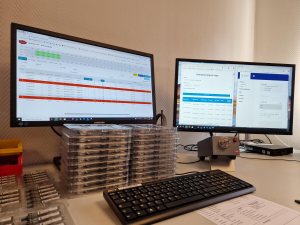
The final stage involves automated visual inspections of both the TOSA (Transmit Optical Subassembly) and ROSA (Receive Optical Subassembly). These inspections confirm the absence of defects or contaminants and ensure full compliance with IEC standards and Skylane's internal requirements.
Our experience with multi-vendor environments enables us to deliver transceivers coded for multiple NEM platforms, offering compatibility with more than 100 systems and thousands of switch models.
The Skylane Advantage
Through our end-to-end certification and testing methodology, we ensure that every optical component we ship is ready to perform in your network environment. Our customers benefit from reliable, high-performance optics — all while enjoying the flexibility and value of compatible solutions.
 Celebrating 4 Years as Part of the Amphenol Family
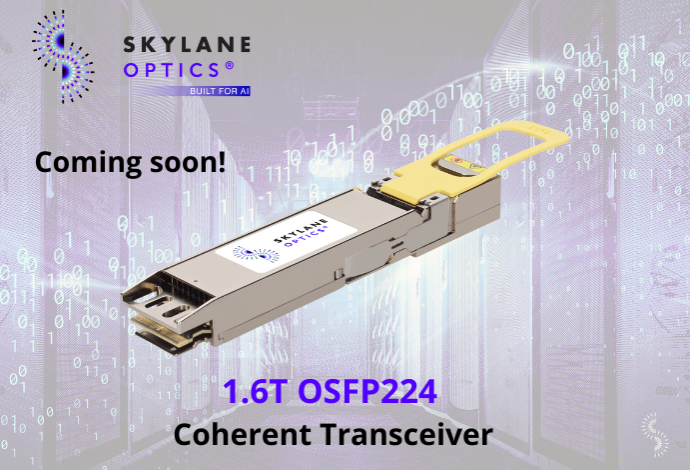 New era 1.6T OSFP224 2xDR4 Transceivers
 Como usar EDFAMUX para expandir a rede óptica sem aumentar custos
 What is an Optical Transceiver?