
 English
 Español
 Português
 Français
What Is Coherent Optics ? Part2

CFP2 DCO functional diagram
CFP2 non-coherent functional diagram
Forward error correction (fec)
- Forward Error Correction is a method to dramatically improve the receive sensitivity in a system
- Overhead information (up to 15%) is added to the payload to enable auto-correction of transmission errors
- A Net Coding Gain (NGC) over 10dB can be achieved with propriety FEC (pre-FEC threshold 10-2)
- The drawback of introducing FEC is increased power consumption and added latency (up to 10ms)
- FEC is poorly standardized, meaning that compatibility between different vendor's equipment is limited
- SD-FEC (soft-decision) uses the electrical eye directly after the A/D conversion
- HD-FEC (hard-decision) uses the electrical eye after the received bit determination has been done
Different ways to realize 100g « Zr » links
10x10G DWDM channels
Requires 20 transceivers, two MUX/DEMUX filters and most likely optical amplification (booster or preamp) since the insertion loss of the filters plus flbre attenuation plus dispersion penalty is close to the limit of the transceiver power budget.
Different ways to realize 100g « Zr » links
Two 100GBASE-ER4 (40km) segments. Requires 4x 100G ER4 transceivers plus midway POP with appropriate equipment and power supply.
A common approach is to use a muxponder (i.e. wavelength converter) for example ADVA and Infinera. It takes a multiple 1310nm 100G signals from the host's port and aggregates it into coherent optics line side.
100g 80km+ links using dco
All of the previous solutions can be replaced by a DCO pluggable “ZR” transceivers allowing 80km point-to-point transmission without amplification. Requires two coherent 100G transceivers.
 Celebrating 4 Years as Part of the Amphenol Family
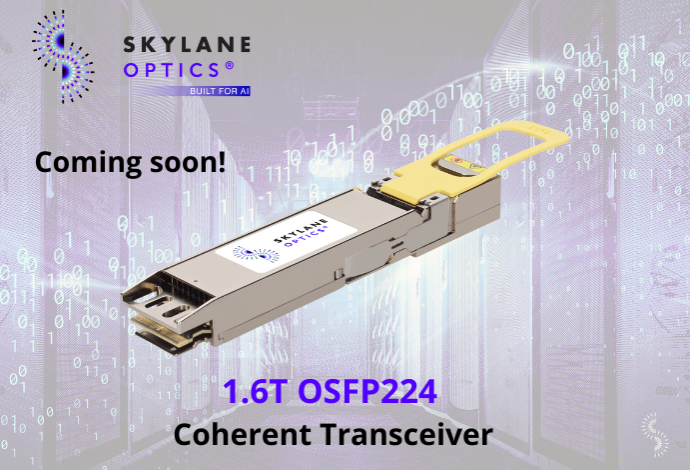 New era 1.6T OSFP224 2xDR4 Transceivers
 Como usar EDFAMUX para expandir a rede óptica sem aumentar custos
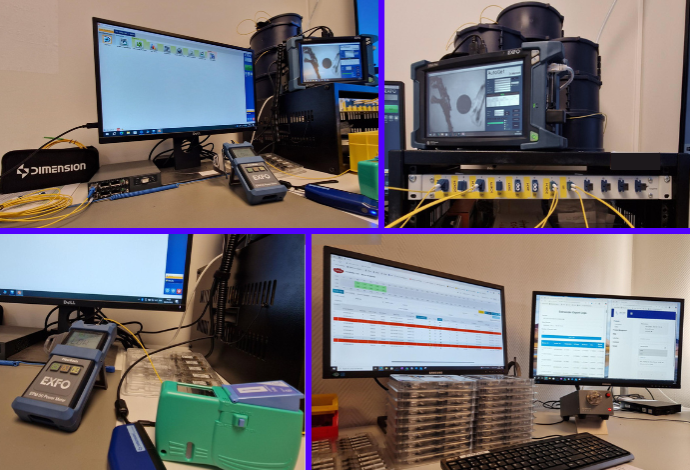 How We Test Our Compatible Optical Components
 What is an Optical Transceiver?